/Pump notes
Pump notes
Short notes from the works
Plain guides to the questions we answer most: reading a curve, NPSH, wear rings and seals. General guidance; your pump’s manual comes first.

Every pump
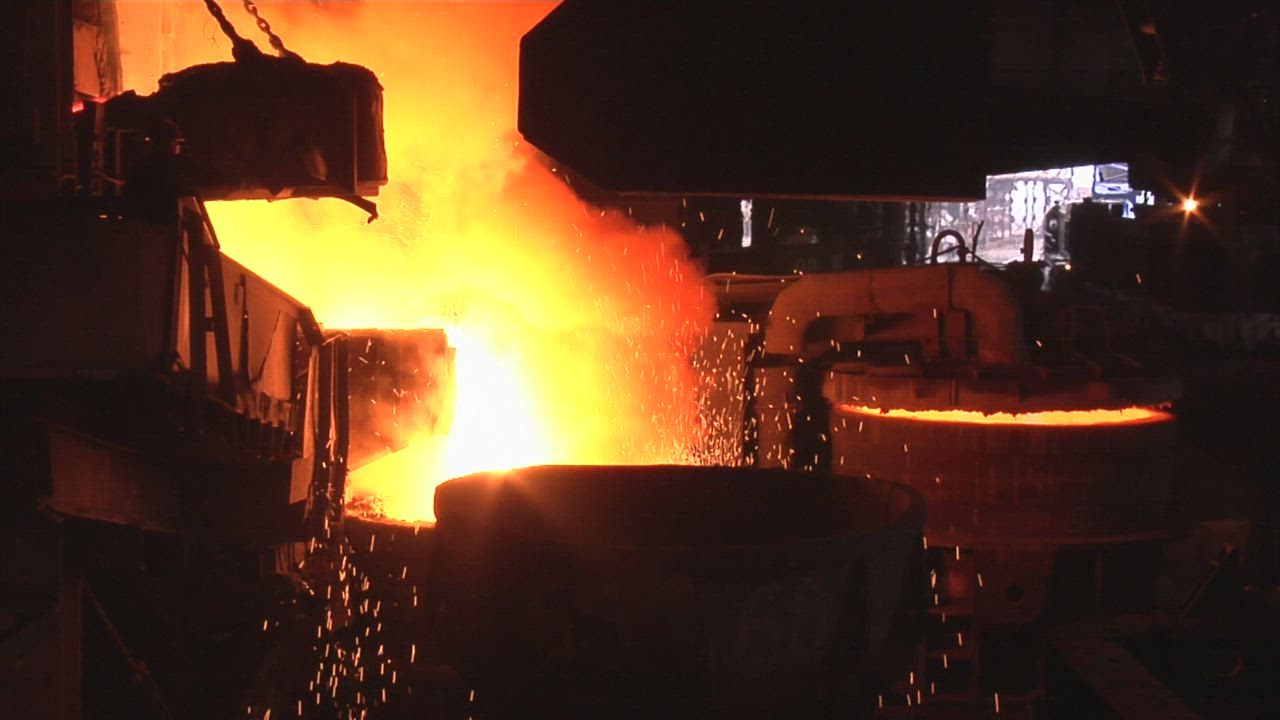
runs on our test loop before it ships

5
Five shops, one works
All notes

Reading a pump curve
Read full noteNPSH in plain words
Read full noteWhen to change the wear rings
Read full noteLooking after a mechanical seal
Read full noteSelection
// 4 min read //
Reading a pump curve
A pump curve shows what the pump can do. The system curve shows what your pipework asks for. The pump runs where the two cross.
The axes
Flow runs along the bottom, head up the side. Head is the height in metres the pump could lift water, which is a cleaner way to talk about pressure because it does not change with the liquid's density.
Most curves carry three more lines on the same flow scale: efficiency, shaft power and NPSH required.
Where the pump will run
Your system has its own curve: static lift plus friction, which grows roughly with the square of the flow. The pump settles where its curve meets the system curve. That is the operating point, and it is only the duty point if both curves are right.
Stay near the best efficiency point
Every curve has a best efficiency point. Running far to its left or right raises vibration, bearing load and seal wear as well as energy use. As a rule of thumb, aim for roughly 70 to 120 % of the best-efficiency flow.
From the works: Several curves for one pump usually mean several impeller diameters. Trimming the impeller to the duty is cheaper to run than throttling a valve.
Suction
// 3 min read //
NPSH in plain words
If the pressure at the impeller eye falls to the liquid's vapour pressure, bubbles form and then collapse against the metal. That is cavitation, and NPSH is how we keep it away.
Available and required
NPSH available belongs to your installation: the pressure at the suction flange above vapour pressure, in metres. NPSH required belongs to the pump and rises with flow. Available must stay above required, with a margin.
What lowers the margin
A suction lift instead of a flooded suction
Hot liquid, whose vapour pressure is higher
Long or narrow suction pipes, strainers and bends close to the pump
High altitude, where air pressure is lower
What it sounds like
Cavitation sounds like gravel passing through the pump. Left alone, it pits the impeller vanes near the eye and the performance falls away.
From the works: Tell us the lowest liquid level and the highest temperature, not the typical ones. NPSH is decided by the worst day.
Maintenance
// 3 min read //
When to change the wear rings
Between the impeller eye and the casing is a small running gap. Water leaks back through it from discharge to suction, and the wear rings keep that leak small.
Why the gap matters
As the rings wear, more water circulates inside the pump instead of leaving it. Flow and head fall at the same speed, and the power per cubic metre rises.
The signs
The pump no longer reaches its old duty point
The motor current stays the same while the flow drops
Sand or grit in the liquid shortens the interval
When to act
Measure the diametral clearance at overhaul. When it has reached about twice the new value, fit new rings. The rings are cheap; the casing and impeller are not.
From the works: A renewable ring means the casing never has to be scrapped because of wear at the eye.
Maintenance
// 3 min read //
Looking after a mechanical seal
A mechanical seal runs two flat faces against each other on a liquid film thinner than a micron. Treat that film well and the seal lasts for years.
Never run it dry
Fill and vent the pump before the first start. A few seconds without liquid can crack the faces.
Normal and not normal
A seal that is slightly damp is normal. A steady drip, a spray or a squeal is not, and usually means worn faces or a failed secondary seal.
What shortens seal life
Misalignment and vibration
Running far from the best efficiency point
Solids or crystals in the liquid without a flush
Cavitation at the impeller
From the works: When you order a seal kit, quote the casing number. It tells us the seal size and face materials fitted to your pump.
Still not sure? Ask us.
Send your question with the casing number or the duty point.
Contact us
Got a duty point?
Let’s size your next pump.
Send flow, head and the liquid. An engineer replies with a selection, a curve and a price.
Stay connected
Pump notes, new series and test-loop open days, a few times a year.
Contact info
Working hours
Mon to Fri: 08:00 – 17:00
Test loop visits by appointment
Sat and Sun: closed
© 2026 VOLUTA, a concept site: product data, addresses, figures and worked examples are samples to confirm before use. Photos: Unsplash (Unsplash License) and Wikimedia Commons: “In-stream inoculation addition while molten cast iron is poured to a green sand mold in a foundry in Bangladesh” by Sm faysal, CC BY-SA 4.0; “Foundry practice; a treatise on molding and casting in their various details (1909) (14782674264)” by Internet Archive Book Images, no known copyright restrictions; “Engine house for pump at Westonzoyland Pumping Station - geograph.org.uk - 7258658” by David Smith, CC BY-SA 2.0; “Blue Grass Chemical Agent-Destruction Pilot Plant Utility Building (12816184725)” by PEO ACWA, CC BY 2.0; “Fire Pump Room, Brisbane, 2021” by Kgbo, CC BY-SA 4.0; “Motorised Pump Irrigation - geograph.org.uk - 4609184” by Rude Health, CC BY-SA 2.0; “Ullrich Water Treatment Plant Intake Lake Austin 2020” by Larry D. Moore, CC BY 4.0; “Duisburg, Landschaftspark Duisburg-Nord -- 2020 -- 7824-6” by the author named on the Commons file page, CC BY-SA 4.0; “Duisburg, Landschaftspark Duisburg-Nord -- 2020 -- 7803-5” by the author named on the Commons file page, CC BY-SA 4.0; “Waste Water Treatment Plant” by Dmitry Makeev, CC BY-SA 4.0; “Hala główna Galerii Elektrownia w Czeladzi z ekspozycją maszyn i urządzeń pokopalnianych” by Krzysztof Popławski, CC BY-SA 4.0. Films: Mixkit (Mixkit Free License). Pump drawings rendered from the site's own 3D model.


